
DIY Sheet Mask Recipe for Dry Skin

Sheet masks are one of my favorite at-home spa skin care recipes to make. For those of you who may not have heard of them before, sheet masks are a skin care treatment that uses a piece of fabric soaked in a solution that is intended to bring a host of benefits to the skin. They can be found in just about any store that sells skin care products, but they come at the price of additional preservatives for shelf stability and single-use packaging. They also range in price, with the inexpensive ones including less than natural ingredients and the expensive ones being well…expensive! This is why I opt to make my own.
They are shockingly easy to make and are customizable for all skin types and needs. Sheet masks often feature hydrosol, herbal infusions, skin care oils, vegetable glycerin, and in my home spa, raw honey from my apiary. The key to a good sheet mask is to craft it so the mixture of water-based ingredients and oil-based ingredients is balanced.
Watery ingredients like hydrosols, herbal infusions, and vegetable glycerin are light and help to evenly coat the cloth. They are also easily penetrable and absorbable in the skin. In this recipe, I called upon rose hydrosol which is gentle and refreshing. I will also sometimes use cucumber hydrosol if I’m seeking an even gentler mask experience. I also added vegetable glycerine because my dry skin likes this inclusion. Vegetable glycerine is a humectant, meaning it helps the skin retain moisture.
How to Make Vegan Wax Melts + Stress Support Essential Oil Blend
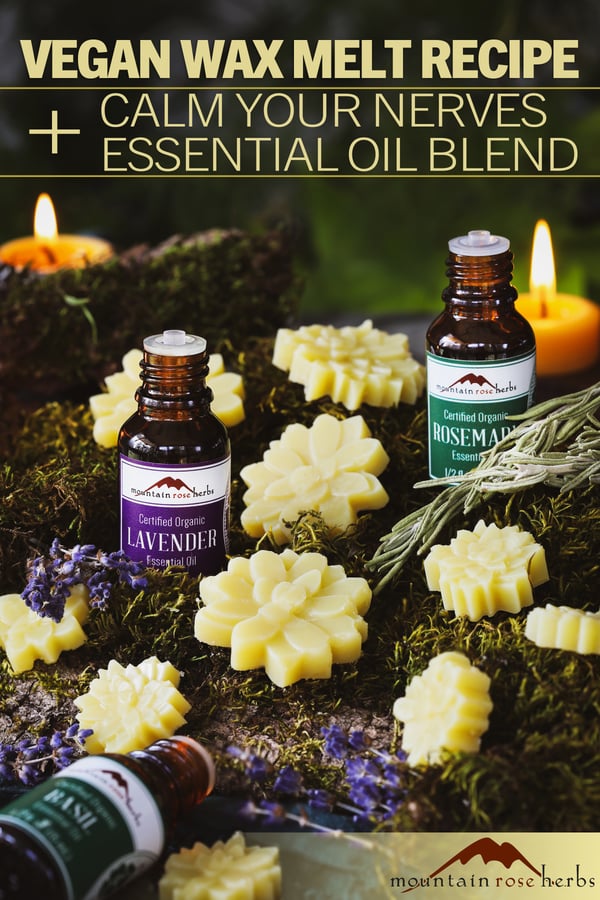
Since I started sharing recipes for my aroma melts, people have asked me for a beeswax-free version. I was initially reluctant because the vegan wax alternatives can be a bit finicky, and I have always had great luck with beeswax. I finally decided to accept the challenge and took a retreat to my creative space to formulate a vegan wax melt recipe. After a few dozen rounds of trial and error, I discovered that carnauba wax is my preferred beeswax alternative. It has no aroma and is a much harder wax, so I don’t have to use as much of it as I would in a typical wax melt.
The hard part was finding the golden ratio to get the melts to stay solid at room temperature while also having them melt in store-purchased wax melters! And by golly, I have done it! It took hours of testing different ratios and combinations, but I finally came up with a core recipe I feel good about.
If you think “watching grass grow” is hard, you should try “watching carnauba wax melt.” Luckily, I have done lots of that for you so you can just jump to the fun part!
Understanding Aroma Notes for Essential Oil Blending: Base Notes

The art of essential oil blending is a delicate and thoughtful process that I often compare to the individual layers added to a painting. Just as each brush stroke on a canvas gradually builds on the layer of paint underneath to create a harmonious result, crafting essential oil blends applies the same principle. In the world of perfumery and essential oil blending, the three commonly recognized “paint” layers are known as fragrance notes, which encompass top notes, middle notes, and base notes. At the foundation of these blended layers, you will find base notes.
Also referred to as the fixative note, dry out note, or bottom of the aroma, base notes are the rich scents that linger the longest in an essential oil blend. Typically, base notes make up between 5% and 20% of a blend. Although this percentage may sound small, base notes truly make the age-old saying “a little goes a long way” live up to its name.
Brightening Berry and Honey Face Mask & Exfoliant

This year, I set out to create a natural skin care treatment for my dull and dry winter skin. So I took to my crafting space to work on a mask and scrub that was brightening and cleansing. After several iterations, I created one that I’m quite excited about, and I think you all are going to enjoy it, too.
When creating new skin care recipes, I generally formulate them with ingredients I can use for other things. I especially like it when the core ingredients can be used internally for health and wellness, as in this recipe. Here are the ingredients that inspired this recipe, along with reasons they are good for the skin and other ways to use them.
Exploring the Senses Through Aromatherapy

Our senses tell us about the world around us. One of the most interesting sensory explorations is smell because our olfactory system sends signals directly to our brain and is one of the most immediate ways to trigger emotions. As you may have seen in the “blind tea tasting” video we shared a few weeks ago, blind tasting and smelling offers insights into how we can connect with plants before putting a label or perceived function on them. With that in mind, we’re excited to share this video of our friend, Erika Gentian of Sovereignty Herbs. Erika recently visited our headquarters in Eugene, Oregon to show us how blind hydrosol smelling can help us get to know our herbal allies. Learn more about how the power of smell can help you work with hydrosols for gentle, effective support.
Wind Element Perfume Recipe with Essential Oils: Head in the Clouds Blend

Welcome to part three of my Elemental Perfume Blend series. What started as a journey to create fun DIY party favors for my upcoming wedding has turned into a rabbit hole of perfume recipe development. So far, I have shared an Earth Goddess perfume, an Aquatic Mermaid perfume, and now this wind-themed blend for my air sign friends.
With just three essential oils, this blend is made of top and middle notes to keep it as light as air.
Ravensara, one of the most underrated essential oils, is derived from the leaves of the Ravensara aromatica. This uplifting oil has herbal and camphoraceous notes with gentle hints of sweetness and becomes warmer and spicier as the scent begins to evolve. The oil is also renowned for its calming and “go with the flow” properties.
Coriander makes an appearance in this blend and is, in my opinion, THE most underutilized oil in natural perfumery. Extracted from the seeds of the coriander plant (Coriandrum sativum), this oil brings a touch of warmth, harmony, and familiarity. As a seed, it contains life-bearing and grounding qualities that help to promote a sense of stability when you have your head in the clouds.
Grapefruit (Citrus paradisi ) tops off the blend with a burst of zest and freshness. Known for its energizing qualities, grapefruit oil awakens the senses and revitalizes the mind. Its vibrant citrus notes infuse the blend with liveliness and a sense of weightlessness.
Homemade Lotion with Organic Sweetgrass Hydrosol

Perhaps every herbalist or skincare formulator has a recipe that once wholly intimidated them. Homemade lotion was one of those for me. I had a pretty epic and expensive DIY lotion fail once, and it took me a long time to build up enough confidence to try blending water and oil into something usable again. Mountain Rose’s organic sweetgrass hydrosol was the impetus to suck up my courage and try again. Its subtle, honeyed aroma has a wonderfully green-earth undertone that makes it a perfect base for a variety of skincare formulations, from facial toners to body sprays to lotions. In this simple lotion recipe, I love it with just a touch of vanilla in the form of organic benzoin resin.
Humans have been cultivating sweetgrass (Hierochloe odorata) for over 6,000 years, and it has a long history of spiritual use: strewn on the floors of Medieval churches in Europe and considered one of the four sacred herbs by First Nations peoples in North America. Sometimes called the “hair of Mother Earth,” sweetgrass is said to please the spirits and is an excellent choice to prepare spaces for prayer, ritual, and meditation. In its hydrosol form, I find it has that same “clearing” element to its scent; it resets my mind and opens my heart.
DIY Sweetgrass Vanilla Body Lotion

Humans have been cultivating sweetgrass (Hierochloe odorata) for over 6,000 years. Sometimes called the “hair of Mother Earth,” it is said to please the spirits and is an excellent choice to prepare spaces for prayer, ritual, and meditation. In its hydrosol form, sweetgrass brings this same sense of “clearing” in its subtle, honeyed aroma and offers a green-earth undertone that makes it a perfect ingredient in a wide variety of skincare formulations including facial toners, body sprays, and lotions. We wanted to give people an easy way to experience sweetgrass hydrosol for themselves, so we whipped up a new homemade lotion recipe we think you’re going to love!
Guasha Massage Tutorial with Jiling Lin

Have you ever had the opportunity to experience guasha? This traditional East Asian practice is sometimes used as a complement to massage, acupuncture, herbalism, moxibustion, energy work, lifestyle medicine, and more. Practitioners draw a guasha ban (刮痧板) (guasha tool) over the skin with varying degrees of pressure to elicit different effects on the body.
Although guasha is used to treat complex bodily issues, one wonderful way to experience this age-old art is a gentle facial guasha. We’re excited that our friend, herbalist, and East Asian Medicine practitioner, Jiling Lin, has a new blog with all the information we need to do facial guasha at home!
Herbalist Tips to Beat the Summer Heat

Many of us are ready for fall, but the truth remains that we are still in summer and it is hawt! With the heat and sun come sunburn, heat rash, heat exhaustion, and even heat stroke. There are things we can do to prevent these from happening and natural remedies for when they do.
Why Do We Get Sunburn?
Sunburn is an acute inflammatory response by the skin in reaction to excessive exposure to sunlight. The harmful changes that occur in the skin cells’ cytoplasm (a gel-like substance that is between the cell membrane and nucleus) and the nucleus itself are cumulative over a lifespan and can lead to an increased incidence of skin cancer. Sunburn is common in this era of popular outside summer activities and clothing styles that leave more skin exposed to the sun’s damaging UVA and UVB rays. We’ve all had that burning sensation after being in the sun too long. While limiting sun exposure is the most reliable method of preventing sunburn, we do want to be able to bask in the sun, don’t we?
