
How to Make Herbal Syrups for Cocktails, Mocktails, Pancakes, & More!
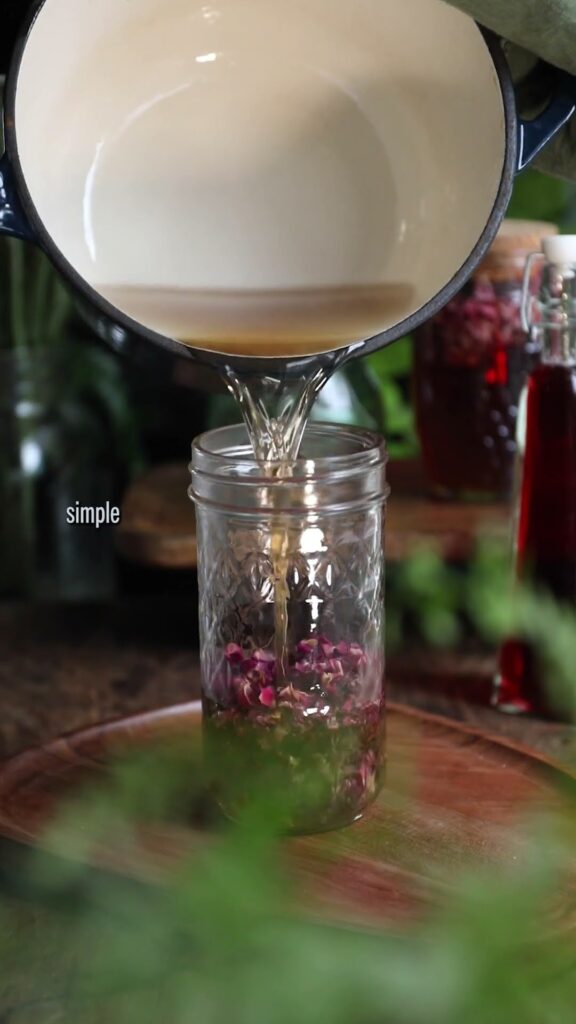
Homemade simple syrups infused with dried herbs are a handy ingredient to have at the ready and as the name implies, they are incredibly easy to make! If you can boil water, you can make simple syrup. Herb-infused syrups can be added to carbonated water, brushed on cakes, drizzled on yogurt or pancakes, and, of course, added to mocktails! They are also a great way to take herbs without the use of alcohol and are especially great for getting kids to willfully add healthy ingredients to their diet.
Herb-Infused Simple Syrup Recipe Using Dried Herbs

Simple syrups are a fun and surprisingly useful ingredient to keep on hand in your refrigerator, especially when they are infused with your favorite herbs. A lot of people think of mocktails or cocktails when they think of simple syrups, and that’s definitely a good use for them. But they are equally wonderful added to carbonated water, as sweetener in tea, brushed on cakes or cupcakes, drizzled on yogurt or pancakes, and more. They are called “simple” syrup for a reason—if you can boil water, you can make simple syrup. And infusing simple syrups with herbs takes them from being a good ingredient to an amazing one!
Interviews On Herbal Radio With Thomas Dick | Featuring Rosemary Gladstar

We hope you enjoy this week’s episode as we chat about Rosemary’s upbringing, the importance of bringing community together towards action, her current favorite simple tea blend (listed below), and so much more.
How to Make Herb-Flavored Alcohol + 3 DIY Herbal Spirit Blends

In the cycle of the year, I find the weeks between Imbolc (February) and Beltane (end of April) to be a precious, restful time in which I finally have space to be creative. We’re past the months of food preserving and winter holidays and not yet at the point when I will jump back into the annual joy/work of my yard, garden, and orchard. This is the only time of the year when I don’t have a dozen other priorities vying for my attention. It is an ideal moment to take a look at my apothecary and think about the herbs that I should use up before they start to get old. As well as making tinctures, glycerine extracts, and infused honey, I find this to be a perfect opportunity to make herb-infused spirits to add to my liquor cabinet for handcrafted cocktails throughout the year. I recently combed back through Mountain Rose Herbs blogs for inspiration, and—as usual—came up with infusion gold. I’m excited to share three reader-tested, herb-infused distilled spirits recipes with you!
Herb-Infused Spirits & Herbal Cocktail Ideas

Herb-Infused distilled spirits show up in the finest, most delicious cocktails, but can be prohibitively expensive when you want to purchase a bottle for your home liquor cabinet. Fortunately, infused spirits are also some of the easiest herbal formulations to make! All you need is alcohol, herbs of choice, and jars and bottles for infusing and storing. In a matter of days, you can stock your bar with a wide variety of different flavors to take your cocktail creations to the next level throughout the year. Also, herb-infused spirits are a great way to use up herbs in your home apothecary before they get old. We’ve got three time-tested recipes to get you started—roasted cacao and vanilla bean brandy, smoked peppercorn vodka, and lavender gin. Yum, perfection in a bottle!
What Is a Cold Infusion + Herbs to Cold Infuse

Infusions are an enjoyable method for savoring and receiving the benefits of herbs. Also referred to simply as tea, an herbal infusion is technically called a tisane and involves steeping fresh or dried herbs in water for a period of time. The water used for an infusion can be hot or cold depending on the herbs you use and the effect you desire, as well as your preference and mood. In this blog, we are going to focus on what a cold infusion is, what herbs work best with this method, and how to make a cold infusion.
A cold infusion is a method for making a tisane using room temperature water rather than hot. There are several instances where a cold infusion might be preferred over a cup of steaming hot tea. Due to the gentle nature of the cold infusion method, it is ideal for aromatic plants whose volatile constituents would otherwise be damaged by heat. Additionally, some herbs contain plant constituents that are best extracted at room temperature to draw the most benefits out of the plant material. There are also plant constituents, such as bitter compounds, that you may not want in a cup of tea. These constituents aren’t readily dissolved by cool water, so can make for a more pleasurable brew. Lastly, you may want a cold infusion for sheer enjoyment. There’s nothing more fun or delicious than picking fresh herbs from the garden on a sunny day and letting them infuse in the natural warmth. It’s a summertime ritual at our house.
Interviews On Herbal Radio With Thomas Dick | Featuring Jiling Lin

Thomas sat down with our good friend and talented herbalist, Jiling Lin, over Zoom this past fall to get to know her a little better. We’ve had the great fortune of partnering with Jiling on numerous projects including filming instructional videos, writing poetic blogs and journal articles, emceeing Free Herbalism Projects, and of course hosting Tea Talks on Herbal Radio. We’re so grateful for the opportunity to get to know Jiling even more as Thomas and Jiling chat about her upbringing, the sharing of plants and stories, and the pivotal herbal plot points in her life. We hope you enjoy our conversation with Jiling as much as we did!
Nourishing Herbal Infusion Recipe—A Tea With Purpose

When it comes to nutritive plants like these four treasured herbal allies, opting for the infusion method will impart your water-based brew with the full strength of the plant material. Certainly, you could steep these herbs in a tea bag for 10-15 minutes. However, you’ll receive exponentially more of the nutritive and tonifying benefits with the infusion method, which employs a hefty volume of herbs steeped for hours. This allows more of the minerals, chlorophyll, and other nutrients to be pulled into the solution.
Think of it this way: Infusions pull more of the power-packed punch out of your dried herbs. Brewing your herbs this way gives you a strong, nourishing brew—deep and rich in color, flavor, and constituents. Just the way you like it.
Herbal Tea Blend Recipe For Meditation

We know that meditation is good for our minds, our hearts, and our bodies, but for some of us, sitting still for more than five minutes is a real challenge, which puts a damper on the whole meditative process. That’s when we turn to our favorite supportive herbs that can help us slow down, take a breath, and stop the circular thinking that distracts us. Our Meditation Tea Blend Recipe checks all the right boxes to get us in the right headspace with a layered balance of nutritious base herbs, supporting nervine herbs, and delicious accent herbs. Take a minute, have a cup of tea, and give your body the gift of sitting still.
Digestion-Supporting Cordial Recipe for the Holidays

Although many people think of cordials—also known as liqueurs—as cocktail ingredients, they can also be potent and delicious digestifs. DIY cordials can be simple with just two or three ingredients or you can make them more complex by blending bitter and aromatic botanicals to delight your nose and palate. Either way, they are one of the easiest herbal recipes you can make: put herbs in a jar, add neutral spirits, shake it now and again, and wait. That’s it. And when you make a cordial with digestion-supporting herbs and spices, you turn this delicious little liqueur into a highly effective digestif. Best of all, we’ve got just enough time to make a cordial for the winter holidays! To get you started, here’s a festive midwinter cordial recipe that is the perfect finish to a hearty cold-weather meal when you’re relaxing in the company of your favorite people.
