
Herbalist Tips to Beat the Summer Heat

Many of us are ready for fall, but the truth remains that we are still in summer and it is hawt! With the heat and sun come sunburn, heat rash, heat exhaustion, and even heat stroke. There are things we can do to prevent these from happening and natural remedies for when they do.
Why Do We Get Sunburn?
Sunburn is an acute inflammatory response by the skin in reaction to excessive exposure to sunlight. The harmful changes that occur in the skin cells’ cytoplasm (a gel-like substance that is between the cell membrane and nucleus) and the nucleus itself are cumulative over a lifespan and can lead to an increased incidence of skin cancer. Sunburn is common in this era of popular outside summer activities and clothing styles that leave more skin exposed to the sun’s damaging UVA and UVB rays. We’ve all had that burning sensation after being in the sun too long. While limiting sun exposure is the most reliable method of preventing sunburn, we do want to be able to bask in the sun, don’t we?
The Nurtured Herbalist | Tea Talks Roundtable

Join herbalists Jiling Lin, Erika Galentin, and Camille Freeman for a lively Tea Talks Roundtable discussion on Nurturing the Herbal Practitioner.
We explore:
• some of the challenges that come with running an herbal practice
• how to create a work cadence that’s realistic in the long run
• establishing clear boundaries between work and personal life
• how to run an herbal practice that feels ethically aligned, and sustains you
• how we can feel supported and connected as herbal practitioners– and continue growing and evolving as people and clinicians
• the role of the herbalist in modern life
• …and more!
Homemade Deodorant: How to Make Natural, Herbal, Roll-On Deodorant

Summer being what it is—with all the extra sunshine and outdoor fun—our deodorant choices start to matter in a bigger way. Consumers have become increasingly aware of the potential issues that can come with using deodorants with ingredients like propylene glycol, aluminum, and triclosan, and have been turning more and more to natural deodorants. Unfortunately, while over-the-counter natural deodorants are a safer and more earth-friendly option than those loaded with parabens and chemicals, they are still packaged in mostly non-recyclable plastics that millions of Americans throw away every year. Happily, it’s an easy task to make your own natural, herbal, roll-on deodorant.
Just so we’re on the same page, it’s important to know that deodorants aren’t meant to reduce or eliminate sweat. No matter what those old antiperspirant ads used to tell you, sweating is essential for the human body. Its primary task, of course, is to help control body temperature, but sweating also helps moisturize the skin and increase skin hydration. The kind of sweat we produce when exercising or relaxing in a sauna is also evidence that we’re supporting heart health and mental wellbeing. Our bodies need to sweat, so it behooves us to find natural, safe ways to neutralize any resulting underarm odors from this necessary bodily process. That’s where our herbal allies come in!
This simple recipe for a liquid roll-on deodorant is a longtime, tried-and-true Mountain Rose Herbs favorite. It’s effective, wonderfully low-mess, and easily portable so we can take it with us and reapply as needed. Also, it is easy to customize to meet your unique needs and aroma preferences. Need more absorbency? Add a bit of baking soda or organic arrowroot powder. Want to customize the scent? Create your own blend of essential oils!
Plant Stories | Featuring Lucretia VanDyke

We are so pleased to feature another interview with our friend Lucretia VanDyke. On Herbal Radio, we have learned about Lucretia’s upbringing and what led her to work with plants, but we have never gotten to learn what plants she loves and why. In this Plant Stories episode, Lucretia talks about her favorite edible plants of New Orleans and the significance they played in her upbringing that began her herbalism journey.
With a journey that began when she was a little girl mixing herbs, mud, and roots on her grandparents’ farm, Lucretia VanDyke has had a lifelong connection to the plants. She has been in the wellness industry for over twenty-five years. Her quest for knowledge and storytelling has led her all over the world to learn about remedies, traditions, and ceremonies from indigenous healers.
One of the foremost experts on Southern folk healing arts, Lucretia integrates rituals, plant spirit meditation, holistic food/herbal medicine, and ancestor reverence into people’s practices.
Lucretia has worked and trained with many internationally known spa and skin care companies. She is a holistic educator, speaker, herbalist, sacred sexologist, ceremonialist, spiritual coach, intuitive energy practitioner, diviner, author, and world traveler. Lucretia brings her vivacious spirit and her message of ancestral connection in herbal practices to inspire others to embrace their unique relationship with the plants. Teaching herbal classes, cooking, storytelling, and foraging in the woods learning native medicine charges her soul.
Lucretia’s book African American Herbalism: A Practical Guide to Healing Plants and Folk Traditions is now available through Mountain Rose Herbs: https://mountainroseherbs.com/african-american-herbalism
Dream Tea Recipe: Herbs for Lucid Dreaming + Deep Sleep
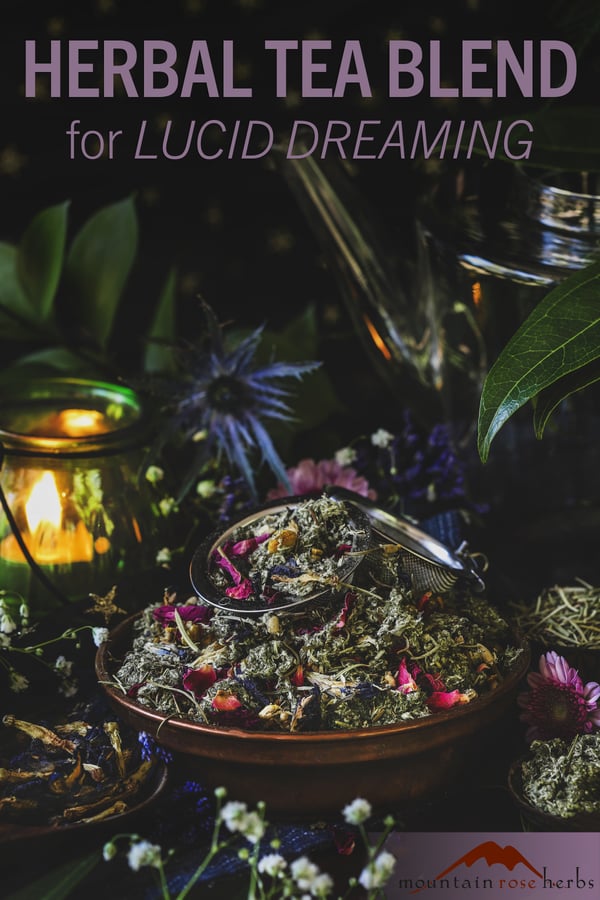
In modern Western culture, people often disregard dreams as mere fluff that our brains discard as we slumber. But throughout history and cultures, humans have valued dreaming in different ways. Dreams are seen as a door or bridge to the spirit world or the unconscious. They are often full of symbology from our lives, become outlets for our deepest concerns and fears, or offer us tools for self-reflection and a map to our current state of mind and heart. Although we can dream at any stage of sleep, our most vivid dreams occur during our REM (rapid eye movement) sleep cycle, so depending on how well we sleep, we may spend more than two hours each night in some form of dream state. Sleep researchers tell us that deep non-REM sleep rests our bodies and refills our tanks to start another day and REM sleep is crucial for dreaming, memory consolidation, emotional processing, and healthy brain development.
Sleep comes in two categories: REM and non-REM, and we often cycle between them throughout the time we are sleeping, starting with non-REM and then a period of REM, and then back to non-REM, etc. During the REM cycles, our brain activity and heart rate increase to a more wakeful state, our eyes move from side to side, and our breathing becomes faster and more irregular. This cycle is when we have the most vivid dreams and is also when our amygdala—the part of our brain that processes emotions—is activated. During REM sleep, our brains process emotions as well as new things we’ve learned and also sort through what to do with that information: commit it to memory, set it aside for later, delete it entirely, etc. Additionally, there is a link between REM sleep and brain development, which explains why babies spend so much more time in REM sleep than adults.
Interviews on Herbal Radio with Thomas Dick | Featuring David Winston

This week’s guest on Interviews on Herbal Radio is esteemed herbalist, David Winston. David is well known in the herbal community for his decades of clinical experience, teaching, and medicine making. We hope you enjoy!
David Winston is an internationally known lecturer, author, ethnobotanist and the founder of Herbalist & Alchemist.
For over 45 years, David has been studying, practicing, teaching and researching Chinese, Western/Eclectic and Southeastern American herbal traditions. David’s world-renowned two-year herbal studies program, the David Winston Center for Herbal Studies, has been educating Herbalists, Physicians, Nurses, Naturopathic Physicians, Veterinarians, and Nutritionists in the art and science of clinical herbal medicine since 1980.
David has one of the largest private herbal research libraries in the U.S. The Herbal Therapeutics Research Library has over 8000 volumes, from 1550 to present, and over 15,000 articles on file. This library is a working library used for research for the herbal and nutritional industry as well as for his writing and for Herbalist & Alchemist.
David was one of the professional herbalists who founded the American Herbalists Guild, the first professional herbalists’ organization in the US, which certifies clinical herbalists. He is on the professional membership review committee. David Winston has been on the Review Committee of the Botanical Safety Handbook, which produced a significant information resource, which the entire botanical industry, from manufacturers to researchers, relies upon.
He is the clinical herbal consultant to hundreds of prominent physicians (MDs, NDs, DOs, DCs) throughout the US, Canada and Europe. David has authored hundreds of articles and a number of books on herbs.
Seed Stewardship Project: How You Can Help At-Risk Plants

At Mountain Rose Herbs, botanicals are our business, and the industry has been growing year over year as more people realize the health-supporting benefits of our plant allies. Sounds great, doesn’t it? In many ways, this is a wonderful return to valuing the abundance the natural world has to offer while utilizing the myriad benefits that botanicals provide. Unfortunately, the ongoing and increasing impact of overharvesting wild plants has left many of our native populations at significant risk of decline or even extinction. For this reason, we have invested our time and energy in striking a balance between increasing the availability of the number of botanicals we offer and supporting the conservation of the most at-risk plant varieties.
The Benefits & Uses of Catnip | Featuring Shana Lipner Grover

When we think about catnip, we of course think about cats, right? They can be wildly entertaining when they get their paws on this bountiful herbal ally. Nepeta cataria may make our kitties highly stimulated, but it has the opposite effect on humans; it is a fantastic nervine, a calming, relaxing botanical that is ready to help when we’re stressed or have muscular-skeletal tension, and when we’re menstruating. It’s also an aromatic bitter, so acts as a soothing ally when our gut isn’t happy.
We recently went on a plant walk with our friend Shana Lipner Grover from @SageCountryHerbs to learn more about this gentle herbal ally. Hear what she’s got to say about how this beneficial member of the mint family can be a helpful addition to your apothecary.
Find organic catnip here: https://mountainroseherbs.com/catnip
Grow your own herb garden: https://mountainroseherbs.com/catalog…
Shana is a clinical herbalist, health and nutrition educator, and field botanist. She was a student of award-winning herbalist Michael Moore and also one of Mountain Rose Herbs’ favorite herbalists, Howie Brounstein. Today, she is the director and primary educator of Sage Country Herbs School of Botanical Studies in San Diego, CA.
You can learn more about Shana and the Sage Country Herbs School by visiting htpps://www.SageCountryHerbs.com or by following her on Instagram @sagecountryherbs
Catnip: Beneficial Herb for Humans and Cats + DIY Cat Toy Ideas

Nepeta cataria, commonly called catnip, is an ancient member of the mint family. It has been used in western folk practices for millennia, and is loved for its gentle, calming properties. Herbalists and parents often brew this child-friendly herb into a soothing tisane, but it can also be taken internally as a tincture. For topical use, catnip can be infused in oils, or used as an essential oil or hydrosol to bring an herbaceous, relaxing scent to body care products. Perhaps, however, catnip is best known as the herb most loved by our feline friends.
Arnica Hand Balm Recipe for Hard-Working Hands
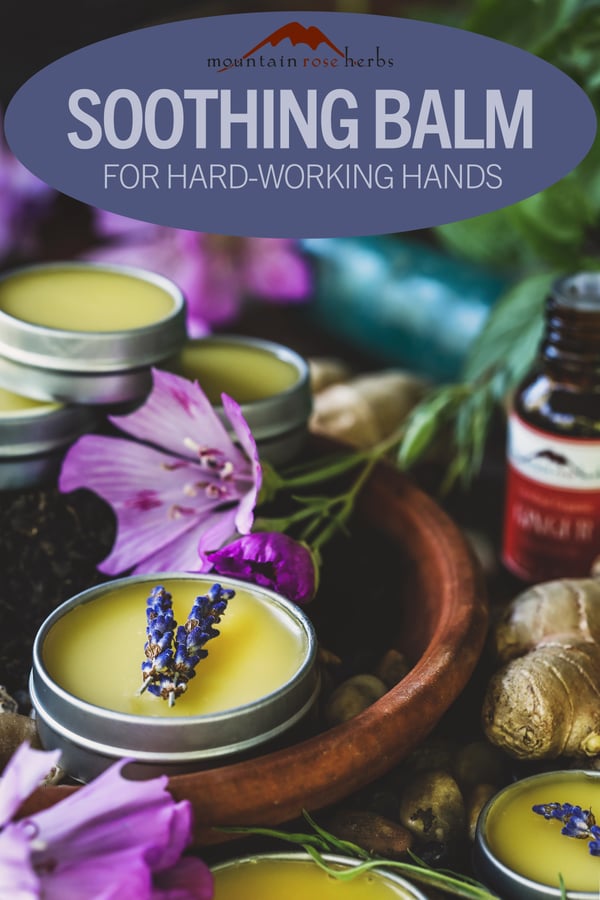
This time of year, I’m reminded of my love for herbal salves, and in particular, this Gardener’s Salve. The blend has been in the Mountain Rose recipe book for many years and is one that I turn to each spring and summer. Between planting, weeding, and pruning, my hard-working hands reach for this DIY hand balm time and time again. Being with the plants does wonders for my emotional wellbeing so taking the proper steps to ensure I can do it in optimal comfort and for many years to come is very important to me.
