
DIY Shower Steamer Recipes (Calming & Uplifting Variations)

Treat yourself or someone you love to a spa-scented shower experience with easy-to-create “Shower Steamer” tablets. Shower steamers use all-natural salts (typically baking soda) and essential oils. These little aromatherapy pucks can turn your shower into a spa-like experience. It is a simple product made up of just a few household ingredients and your favorite essential oils. The tablets dissolve slowly as you shower to create a lasting aromatherapy experience and the warm steam helps diffuse the scent. You can select scents that will energize, relax, or help with seasonal congestion.
Body Into Balance, With Maria Noël Groves | Tea Talks With Jiling

Jiling and Maria discuss favorite easy-to-grow herbs for a medicinal herb garden, “remedy gardens,” favorite herbs for delicious teas, increasing access for herbal classes within a for-profit business model, and more. We hope this conversation inspires your spring planting, growing, learning, and harvesting projects!
An Integrative Wellness Approach | Featuring 7Song

In 2006, esteemed herbalist 7Song (@7Songsevensong ) reluctantly attended a planning meeting for a new clinic in his hometown of Ithaca, New York. He was surprised to learn that there were plans to provide an herbalism practice alongside other alternative therapies and conventional healing modalities–an approach in which our mainstream healthcare system often falls short. Not only was this multi-faceted approach fresh and exciting, but all services would be offered to the community for free. Seventeen years later, the Ithaca Free Clinic is still serving Tompkins County with 100% free integrative medical services.
Natural Shampoo Recipe With Herbs

Many people want to get away from conventional hair and skin care products for two important reasons; they are full of unpronounceable synthetic ingredients that make it nearly impossible to know what we’re rubbing all over our bodies, and those over-the-counter products are packaged in materials that often can’t be reused or recycled. A lot of us first came to herbalism looking for natural, DIY alternatives. But in regard to skin and hair care formulations, it’s often not so simple.
Tips for Labeling Your Herbal Formulations + FREE Label Template!

At Mountain Rose Herbs, we talk a lot about the importance of labeling homemade herbal remedies, essential oil blends, and the other handcrafted goods that we put in our apothecaries and gift to our loved ones. Proper labeling makes at-a-glance identification easy, ensures we have appropriate dosage information, and helps us keep track of the age of our formulations. On a purely practical level, it also makes it easier to avoid having a cupboard full of unused mystery bottles. We may think we will never forget what we put in that tincture, tea, or aromatherapy blend, or we may have the best intentions of making a label and writing helpful notes later. But then life happens, and we put it off. So there we are weeks or months after, realizing we can no longer remember the exact proportions or even which tincture is which. We have all been there and done that.
Sultry Perfume Recipe with Tonka Beans and Essential Oils

If you’ve had the opportunity to work with tonka beans (also called tonkin or tonquin beans), you know they have a heavenly aroma: a blend of vanilla-like essence with undertones of tobacco, pistachio, and musk. They are perfect for perfumery. The dilemma is how to get that delicious scent into a perfume. It turns out, a simple alcohol extraction is the key! Then add pure organic vetiver essential oil and a touch of sandalwood to this aromatic base, and you have a luscious, warm, sultry homemade perfume. Our three-ingredient tonka bean perfume blend is the perfect place to start exploring the wonders of this wondrous South American legume.
Hot Oil Treatment for Hair

When it comes to hair care, a routine of deep conditioning can make a huge difference in the health and appearance of your hair and scalp. Choosing the right oils is one of the key parts of this process, so I have broken down some of my favorite oils for hair care and shared a luscious hot oil treatment that I formulated for weekly use.
I called upon coconut, argan, neem, and castor oils for this blend. These are staples in my household, and I love the versatility of using them for hair care, skin care, and even pest control (as is the case with neem oil).
Citrus Essential Oils: How to Choose the Right Citrus Oil

Citrus essential oils are bright, sweet, and sour and are known to bring a smile to your face. They are energetically uplifting and engaging and pack a punch in DIY cleaning products. But which one should you use?
Organic citrus oils are cold-pressed from the fruit peel of various citrus trees. These lovely essential oils are mostly made up of the same constituents but vary in the amounts that they contain. (+)-Limonene is the primary monoterpene in all of them and contributes to their use in surface cleaners, room sprays, and soaps.
What Are Alkaloids in Plants & How to Extract Them

In our quest to unravel the tangled strings of phytochemistry, it’s important to understand that it takes time and practice to grasp the ins and outs. Taking it slowly, leaning into one constituent group at a time, can help the herbalist fully embrace their actions and needs. While studying the constituents in plants and the menstrua that extract and preserve them seems a bit too “science-y” for some, remember that is what the alchemists of yesterday were all about. Perhaps they didn’t have names such as polysaccharides, antioxidants, terpenes, and the like. However, they laid the groundwork for herbalists today with their attempts to classify and catalog the reactions of herbs in the bodies of their patients. It was in the 17th century that alchemy became chemistry as the emphasis leaned more toward experimentation and critical thinking and relied less on spirituality and mysticism. We, as experienced or budding herbalists, can explore both critical thinking and the mystical side of plants.
Cookies and Cream Lip Balm Recipe
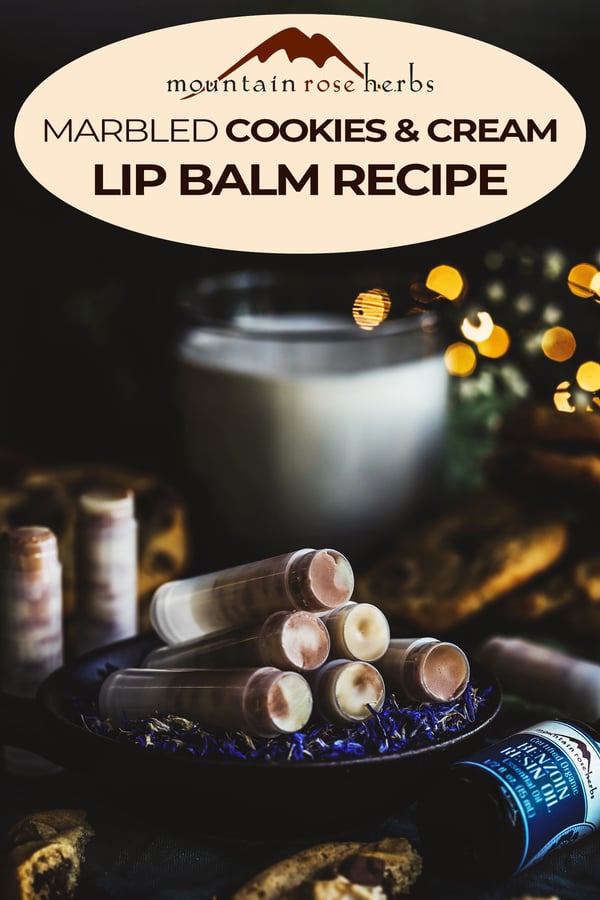
Each year around the holidays, I create a new lip balm recipe to share on both the Mountain Rose Herbs blog and with my friends and family. They make a great stocking stuffer and the people in my life enjoy seeing what I’ve come up with for the season. I love that lip balms can be made in bulk for sharing, and I love this fun and useful expression of my craft.
This hydrating lip balm calls in the emollient qualities of shea butter and pairs with the comforting scents of cocoa butter and benzoin resin for an intoxicating chocolate and vanilla aroma. When I have the time, I like to make this balm in two different colors and then marble them in the lip balm tube. This added dimension makes for a fun display of my skills and makes it feel more like cookies and cream. However, you can keep it simple if you prefer and skip the marbling effect. That is the beauty of DIY crafting—you can truly make it your own.
