
The Benefits and Uses of Blackberry with jim mcdonald

We recently took a plant walk with our friend jim mcdonald to learn more about blackberry. The common blackberry is part of the Rubus genus that we love for its delicious annual berries and the healthful properties this prickly botanical offers. Like other members of its genus, blackberry is a cooling astringent and has a wealth of antioxidant flavonoids in its leaves and roots. The leaves are a mild astringent that is particularly wonderful in tea blends, while the roots have more powerful astringent qualities.
jim also shares two of his favorite tea blends that include blackberry leaves that you won’t want to miss!
Flowers Inspire Us Together | Featuring Bevin Clare (Rerelease)

Today’s episode is a rerelease of an excerpt from our spring online Free Herbalism Project hosted on April 8, 2021. This presentation was the inspiring and informative intro with our guest emcee Bevin Clare. Bevin covers a few of her favorite spring flowers and notes their traits as well as some lesser known facts. It’s a fun, short presentation, but we think you’ll have a lot of takeaways from it.
Interviews on Herbal Radio with Thomas Dick | Featuring Ryland Engelhart of Kiss the Ground

We first met Ryland Engelhart and Finian Makepeace, co-founders of Kiss the Ground – a nonprofit raising awareness for regeneration through storytelling, education, and advocacy – at Natural Products Expo West in 2022. Since our initial meeting, we knew that we shared foundational values with these inspirational leaders, such as the importance of soil health and sustainable agriculture, sparking our interest to want to get to know them and the organization better.
Plant Stories | Featuring Michelle Guerrero Denison

This week on Plant Stories, we’re releasing our interview with Michelle Guerrero Denison. Michelle is an herbalist, formulator, educator, and the founder of The Twig & Feather. Michelle resides in Southern California and talks about how through her family’s own health challenges, she found herbalism and holistic wellness.
Refreshing, engaging, and open-minded, Michelle’s plant stories are human centric. It’s clear her passion resides in listening to and assisting others on their personal wellness paths. Michelle’s life experiences and philosophy transfer over to her approach to herbalism as well as the ways she shares her herbal knowledge. We hope you enjoy this wonderful conversation with our friend Michelle!
Inspired by the needs of her family, Michelle has been studying herbalism for the past decade or so and opened her online shop in 2019. She practices western herbalism, with a holistic focus. She has had the opportunity to study with several wonderful teachers, and readily admits that she will probably be learning for the rest of her life. Her true passions lie in personal consultations, teaching, and writing. All of these are opportunities to get personal and see how herbs can change a life.
Wild Lettuce: Historical & Present Day Reflections of a Wild Herbal Ally

Wild lettuce is one of those “weed” herbs that is fairly common throughout North America. Its cultivation origins are from Southern Europe. The plant has a long history of use as a nervine and a bitter and, as such, is grown in a variety of places in Europe to capture the beneficial constituents in its latex, leaves, and seeds. Wild lettuce has become naturalized in the United States, where it is now regularly wildharvested.
As the name suggests, wild lettuce is a woodland cousin of our common salad lettuce (Lactuca sativa). Lactuca spp. are members of the sunflower (Asteraceae) family. There are at least 10 species of wild lettuce that grow in North America, some of which are native and others that were introduced. All of the species exude what is known as lactucarium, a potent, milky latex that oozes out of the plant, and particularly the stems, when wounded or broken. Some varieties produce copious amounts of this latex, and because of this, have become the most sought after for health-supporting purposes. Lactucarium resembles the milky latex harvested from opium poppies and, similarly, can be reduced and dried into a thick solid. Hence the reason why the particularly potent varieties of Lactuca spp. found themselves being called lettuce opium in early pharmacopoeias
The Enchanter’s Green: Vervain, Wood Betony, and St. John’s Wort | Featuring Kiva Rose Hardin

This podcast episode is the presentation that Kiva Rose Hardin gave for the Fall 2022 Free Herbalism Project. This was a virtual event that took place over Zoom on October 14, 2022.
Kiva states, Vervain, Wood Betony, and St. John’s Wort were some of my earliest herbal allies when I took my first steps on the plant healer’s path. These three herbs are nervines, but so much more! They have a long history as sacred and magical plants across many cultures. Medicinally, all three are often categorized as calming but also have profound tonifying effects and myriad healing actions that are not always as well-known as they should be. In the class, I will cover my personal experiences with the herbs, including specific indications, application, medicine making, dosage, folklore, and more!
Wild Lettuce | A plant walk with jim mcdonald

We recently spent a day with jim mcdonald (@herb.craft) going on plant walks and seeing what familiar botanicals we could find around Eugene, Oregon. When we found wild lettuce, jim identified it right away based on several clues: it’s gray-green color, it’s twisting leaves, and it’s soft prickles beneath the leaves.
Wild lettuce—a botanical cousin to our beloved salad lettuces—has a long history of use as a nervine, a bitter, and to support restful sleep. There are at least 10 wild species of Lactuca spp. in North America that provide beneficial constituents in their leaves, stems, seeds, and the milky white latex called lactucarium that comes from the plant when it is wounded. We invite you to learn more about this herbal ally.
Tips for Choosing Reputable Seed Companies & Nurseries

Spring is upon us, and many of us spent the cold and dark days of winter planning spring and summer gardens, selecting plant varieties, acquiring seeds, and getting a head start on sowing, germinating, and nurturing the young seedlings in our windowsills and greenhouses. Nowadays, we can buy everything from seeds and trees to full-grown flowers and shrubs at nurseries around the country. But not all nurseries are alike. A surprising number of the most popular suppliers of the seeds and plants we love give little regard to environmental issues. Don’t despair! There are guidelines and best practices we would like to share with the Mountain Rose Herbs community that will help you select seeds and plants that were grown using practices that support the health and vitality of our ecosystem.
Sustainably Foraging So-Cal | Tea Talks Roundtable
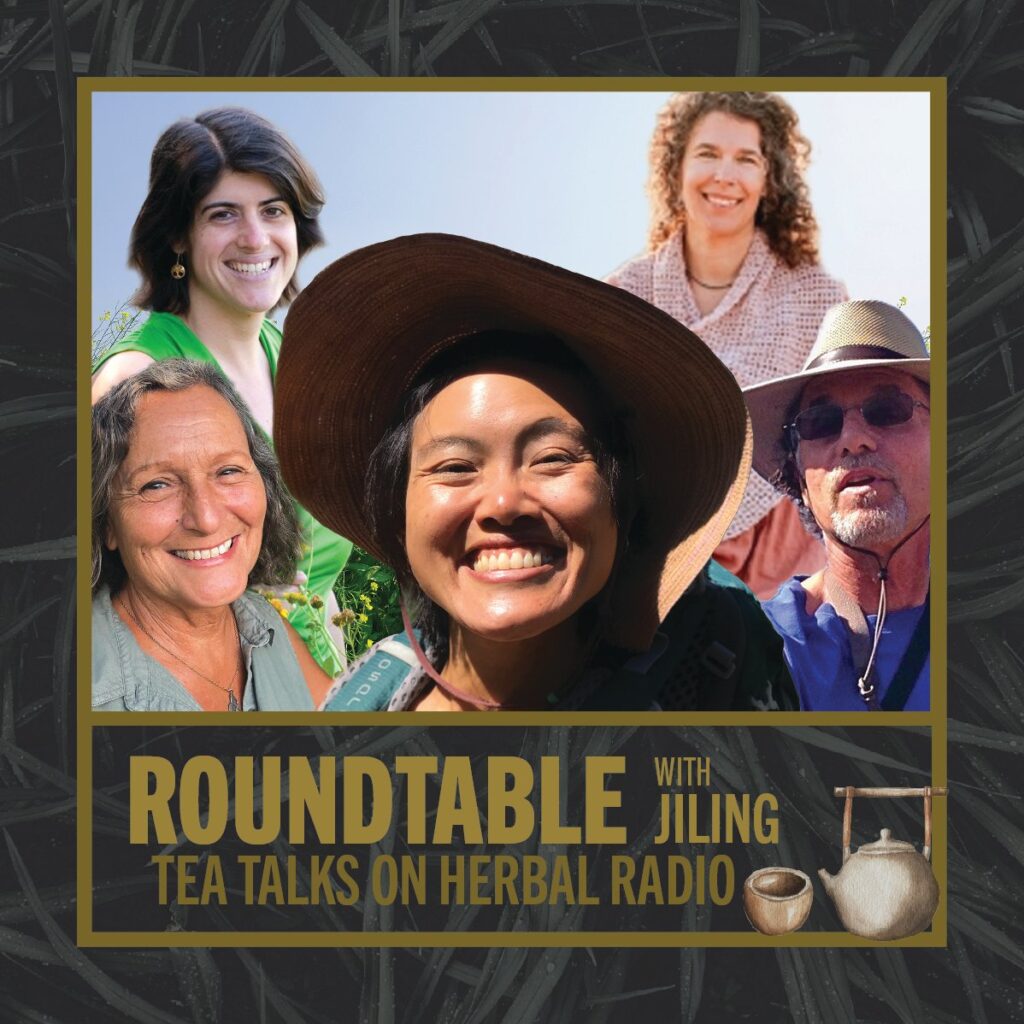
In this new “Tea Talks Roundtable” series, Jiling gathers four local Ventura and Santa Barbara county herbal teachers to discuss sustainable foraging in southern California (aka. So-Cal). Learn more about the Ventura area’s Mediterranean climate, ethical harvesting considerations, and some of the plants that make this area special. We discuss building relationships with plants, spring nibbles, gardening, white sage, horehound, tasty naturalized plants, warrior plants, and conclude with some of our favorite easy to grow medicinals. Enjoy the chat! Learn more about these Ventura area herbal teachers below:
Horsetail | A plant walk with jim mcdonald

We recently had the pleasure of going on a plant walk with our talented herbalist friend jim mcdonald and learned some fascinating information about horsetail (Equisetum sp.). Sometimes called scouring rush, bottle brush, or shavegrass, this botanical ally has been on the planet for more than 350 million years and is rich in minerals, especially silica, which is why you sometimes see it in formulations for healthy skin, hair, nails, and connective tissue. However, horsetail contains thiaminase, which breaks down the necessary thiamin (vitamin B1) levels in the human body and can lead to thiamin deficiency. But did you know that if you decoct horsetail in boiling water or extract it in alcohol that is above 30%, you can destroy the thiaminase without losing the silica and minerals? That is an herbalism hack worth knowing! Learn more about horsetail with jim mcdonald!
Learn more plant facts with jim: https://herbcraft.podia.com
Follow jim on Instagram and TikTok: @herb.craft
Follow jim on YouTube: @herbcraft
