
Ceremonial Matcha: From Field to Cup
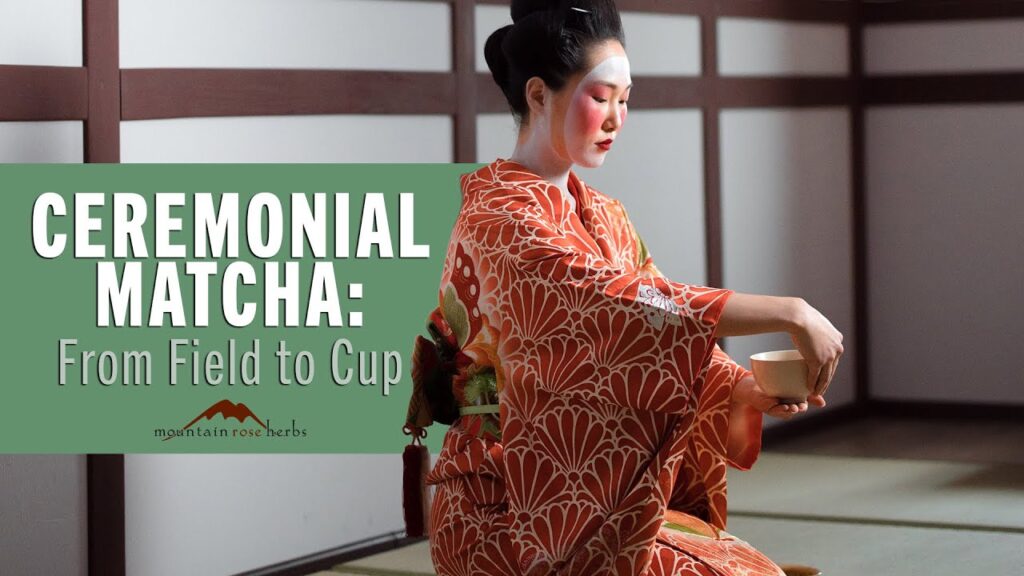
In June of 2023, we embarked on a journey to meet with one of our farm partners in Wazuka, Japan. After a long and exciting travel day, we arrived in the bustling city of Osaka.
Our old friend, Masashi, welcomed us with excitement and an eagerness to share the 350-year-old tea plantation with us. We loaded into his sedan and headed for the misty hills of Wazuka. We first toured the fields where we learned about the growing, shading, inspecting, and harvesting of the fresh and vibrant green leaves. From there we got a behind-the-scenes look at how these organic tea leaves are turned into the vibrant powder we know and love. After fully experiencing the tea planation and all of the heartfelt work that went into making this fine tea powder, we were invited to take part in a traditional matcha tea ceremony.
Having worked with this farmer for over a decade, it was an honor to connect with him in a way that celebrated his culture and to recognize the people that grow and process this special tea for the world to enjoy.
Enjoy a cup of ceremonial matcha: https://mountainroseherbs.com/matcha-tea
Try matcha with a traditional whisk and spoon: https://mountainroseherbs.com/matcha-set
Plant Stories | Featuring Lucretia VanDyke

We are so pleased to feature another interview with our friend Lucretia VanDyke. On Herbal Radio, we have learned about Lucretia’s upbringing and what led her to work with plants, but we have never gotten to learn what plants she loves and why. In this Plant Stories episode, Lucretia talks about her favorite edible plants of New Orleans and the significance they played in her upbringing that began her herbalism journey.
With a journey that began when she was a little girl mixing herbs, mud, and roots on her grandparents’ farm, Lucretia VanDyke has had a lifelong connection to the plants. She has been in the wellness industry for over twenty-five years. Her quest for knowledge and storytelling has led her all over the world to learn about remedies, traditions, and ceremonies from indigenous healers.
One of the foremost experts on Southern folk healing arts, Lucretia integrates rituals, plant spirit meditation, holistic food/herbal medicine, and ancestor reverence into people’s practices.
Lucretia has worked and trained with many internationally known spa and skin care companies. She is a holistic educator, speaker, herbalist, sacred sexologist, ceremonialist, spiritual coach, intuitive energy practitioner, diviner, author, and world traveler. Lucretia brings her vivacious spirit and her message of ancestral connection in herbal practices to inspire others to embrace their unique relationship with the plants. Teaching herbal classes, cooking, storytelling, and foraging in the woods learning native medicine charges her soul.
Lucretia’s book African American Herbalism: A Practical Guide to Healing Plants and Folk Traditions is now available through Mountain Rose Herbs: https://mountainroseherbs.com/african-american-herbalism
Dream Tea Recipe: Herbs for Lucid Dreaming + Deep Sleep
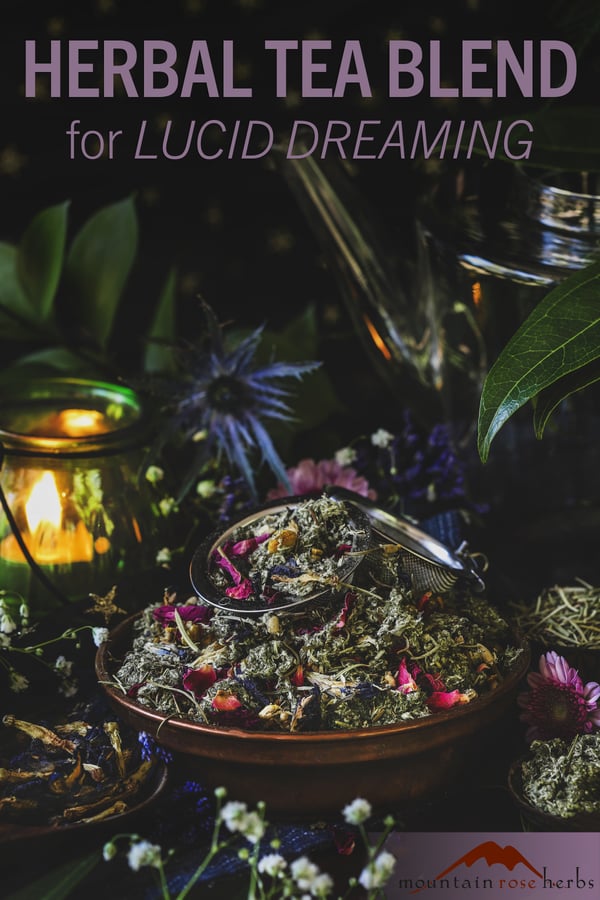
In modern Western culture, people often disregard dreams as mere fluff that our brains discard as we slumber. But throughout history and cultures, humans have valued dreaming in different ways. Dreams are seen as a door or bridge to the spirit world or the unconscious. They are often full of symbology from our lives, become outlets for our deepest concerns and fears, or offer us tools for self-reflection and a map to our current state of mind and heart. Although we can dream at any stage of sleep, our most vivid dreams occur during our REM (rapid eye movement) sleep cycle, so depending on how well we sleep, we may spend more than two hours each night in some form of dream state. Sleep researchers tell us that deep non-REM sleep rests our bodies and refills our tanks to start another day and REM sleep is crucial for dreaming, memory consolidation, emotional processing, and healthy brain development.
Sleep comes in two categories: REM and non-REM, and we often cycle between them throughout the time we are sleeping, starting with non-REM and then a period of REM, and then back to non-REM, etc. During the REM cycles, our brain activity and heart rate increase to a more wakeful state, our eyes move from side to side, and our breathing becomes faster and more irregular. This cycle is when we have the most vivid dreams and is also when our amygdala—the part of our brain that processes emotions—is activated. During REM sleep, our brains process emotions as well as new things we’ve learned and also sort through what to do with that information: commit it to memory, set it aside for later, delete it entirely, etc. Additionally, there is a link between REM sleep and brain development, which explains why babies spend so much more time in REM sleep than adults.
Water Element Perfume Recipe: The Mermaid Blend

If you saw my recent article on my Earth Element Perfume Blend, you know I am working on some fun gift ideas for my upcoming wedding. As a Taurus, I of course started with an Earth element blend which came to me with great ease and intuition. When it came to formulating this water-element perfume though, it took more time and consideration. I found it helpful to imagine the mystical allure of mermaids and the calming essence of water in creating this blend.
I crafted the Mermaid Perfume using a harmonious blend of essential oils that evoke feelings of the meditative movement of water. I called upon clary sage for its soothing and tranquil qualities. Its herbaceous and slightly floral aroma creates a sense of calmness and balance reminiscent of a serene underwater world.
Natural Homemade Slime with Psyllium

Summer is a great time to make simple kid-friendly psyllium slime! Unlike so many of the DIY slime recipes you find on the Internet, slime made with psyllium husk is pure, natural, and safe. It takes less than 10 minutes to make and is good for days of fun. Many of us have psyllium husk around the house, so it’s easy to whip up a batch of this crazy substance that defies Newton’s laws of viscosity, but if you’re not one of those people, you may be asking yourself what in the world you’re going to do with the extra psyllium husk when it takes as little as a teaspoon to make slime. Research shows that psyllium husk offers our bodies myriad benefits, promoting digestive and heart health as well as healthy insulin and blood sugar levels. It’s also handy in the kitchen and is a key ingredient in gluten-free baking. Ultimately, what makes psyllium husk good for our gut and gluten-free lifestyle is also what makes it an excellent ingredient in natural DIY slime: this high-fiber husk expands with liquids and forms a gel. It just so happens that that gel is a lot of fun to play with!
How to Make Slime with Psyllium Husk

Slime—that strange substance that defies Newton’s laws of viscosity—has been a staple in store toy aisles for almost 50 years and the DIY versions have been around almost as long. The typical school-science-project slime recipe involves mixing either borax or contact lens solution with PVA glue and water. The science behind it is a chemical reaction between the polyvinyl acetate in the glue and the borate ions in the contact solution or borax, an action called cross-linking that results in a logic-defying substance that is a whole lot of fun to play with. However, fascinating DIY science aside, too much exposure to boron—which is the base of borax, boric acid, and also, ironically, that contact lens solution—can cause respiratory, skin, and eye irritation, and when ingested can lead to nausea, vomiting, and diarrhea. Note the caution on the front of a box of borax detergent: Caution: Eye irritant, may be harmful if swallowed. Needless to say, that DIY slime hack is not ideal for small children, particularly those who tend to taste-test things. Fortunately for the child in all of us, you can make slime from psyllium husk!
Mountain Rose Herbs Seed Stewardship Project

As many of you know, at Mountain Rose Herbs, we invest time and energy into striking a balance between offering as many sustainably grown and harvested organic herbal allies as possible and simultaneously supporting the conservation of at-risk and endangered plants. We are excited that more and more people are recognizing the abundance Mother Nature has to offer and the many benefits that the botanical world provides. Unfortunately, the increasing impact of overharvesting on wild plants has left many of our most important botanicals at serious risk.
With this in mind, Mountain Rose Herbs has been working with United Plant Savers (UpS) to launch a new Seed Stewardship Project! With the help of UpS Executive Director Susan Leopold, we have chosen a variety of at-risk plant seeds that we are giving away to people who are able to plant them and help rebuild our at-risk plant communities. Now, when you place an order on MountainRoseHerbs.com, you will have the option to select a seed package for FREE. Plant them in a window box, in your back yard, or in a natural area where these plants once thrived—together we can ensure their survival one seed at a time.
Seed Stewardship Project: How You Can Help At-Risk Plants

At Mountain Rose Herbs, botanicals are our business, and the industry has been growing year over year as more people realize the health-supporting benefits of our plant allies. Sounds great, doesn’t it? In many ways, this is a wonderful return to valuing the abundance the natural world has to offer while utilizing the myriad benefits that botanicals provide. Unfortunately, the ongoing and increasing impact of overharvesting wild plants has left many of our native populations at significant risk of decline or even extinction. For this reason, we have invested our time and energy in striking a balance between increasing the availability of the number of botanicals we offer and supporting the conservation of the most at-risk plant varieties.
Catnip: Beneficial Herb for Humans and Cats + DIY Cat Toy Ideas

Nepeta cataria, commonly called catnip, is an ancient member of the mint family. It has been used in western folk practices for millennia, and is loved for its gentle, calming properties. Herbalists and parents often brew this child-friendly herb into a soothing tisane, but it can also be taken internally as a tincture. For topical use, catnip can be infused in oils, or used as an essential oil or hydrosol to bring an herbaceous, relaxing scent to body care products. Perhaps, however, catnip is best known as the herb most loved by our feline friends.
Native California Herbs & 5 Elements, with Athene Eisenhardt | Tea Talks with Jiling

Dr. Athene Eisenhardt, Licensed Acupuncturist and Herbalist, found her path in life by way of the plant world. Working professionally as a field botanist for Yosemite National Park led her to begin wildcrafting and using native California plants as medicine, and to study the Taoist 5 elements in nature. She maintains a private practice in Oakland, California, offering 5 Element Acupuncture and Integrative Herbalism. Athene is also on the Herbology faculty at the Acupuncture & Integrative Medicine College in Berkeley, CA.
Athene and Jiling discuss:
The Five Elements of East Asian medicine
How the five flavors relate to the Five Elements
Examples of native California plant and Five Elements’ interrelationships
How climate informs plant intelligence
Ethical harvesting of native plants
Some of Athene’s favorite plant meditations!
