
Guasha Massage Tutorial

“Guasha” (刮痧) translates as “scraping petechiae.” Gua (刮) is scraping, the act of pulling a guasha tool across the skin. Sha (痧) is petechiae: pinkness or redness on the skin that can arise from scraping, a result of increased blood circulation to the area. Guasha is one of the many tools in our East Asian medicine toolkit, which also includes acupuncture, herbs, massage, moxibustion, energy work, lifestyle medicine, and more.
Benefits of Guasha
By drawing a guasha tool, or guasha ban (刮痧板), across the skin with varying degrees of pressure, we can elicit different effects on the body. Guasha can be used for facilitating tissue repair in musculoskeletal injuries, breaking up scar tissue, lymphatic drainage, and more. Traditionally, guasha has also been used in the early stages of a cold for “releasing the exterior.” In this article, I will focus on gentle facial guasha.
I often recommend facial guasha as an evening ritual, particularly in clients experiencing chronic jaw tension that can lead to bruxism, or grinding teeth during sleep. Chronic jaw tension can also lead to headaches, especially temporal (side of head), or occipital (nape of neck) headaches. I also love recommending this facial guasha evening ritual for folks with dry skin and too many thoughts, as a way to simultaneously nourish the skin, cultivate an easy self-care ritual, and relax before bed.
Guasha Massage Tutorial with Jiling Lin

Have you ever had the opportunity to experience guasha? This traditional East Asian practice is sometimes used as a complement to massage, acupuncture, herbalism, moxibustion, energy work, lifestyle medicine, and more. Practitioners draw a guasha ban (刮痧板) (guasha tool) over the skin with varying degrees of pressure to elicit different effects on the body.
Although guasha is used to treat complex bodily issues, one wonderful way to experience this age-old art is a gentle facial guasha. We’re excited that our friend, herbalist, and East Asian Medicine practitioner, Jiling Lin, has a new blog with all the information we need to do facial guasha at home!
Strawberry Aphrodite Fizz for Love and Passion

Here we are again in the dog days of summer. We all know how important it is at this time of year to pay extra attention to our hydration and wellness. When the days and nights are too hot and your whole body is screaming for something cold and refreshing, herbal extracts and herbal syrups are an easy, delicious way to whip up nutritive, beat-the-heat fizzy drinks at a moments notice. The base of these “functional fizzies” is the same—with just ice, lime juice, and a carbonated water of your choice, you can mix and match simple syrups, herbal extracts, and herbal syrups to get exactly the flavors and wellness boost you need. We’ve got 3 delicious fizzy drink recipes to get you started: a Strawberry Aphrodite Fizz and Gingery Hibiscus Fizz with Ultra Elder extract, and a Gingery Green Tea Fizz with ashwagandha and cinnamon extracts. Keep your favorite simple syrups, extracts, and herbal syrups on hand to make the best summer refreshers.
Plant Stories | Featuring Richo Cech & Co-Host Jiling Lin

On this episode of Plant Stories on Herbal Radio, we had the opportunity to speak with the acclaimed and enthralling herbalist, Richo Cech. We dive deep into Richo’s life and passions, discussing everything from his seed-seeking adventures in Africa, to captivating stories of how he grew Strictly Medicinal Seeds from the ground up (pun-intended).
Richo Cech started his professional work as an archaeologist and ethnobotanist in East Africa. Upon his return to the United States in 1978, he began cultivating and saving the seed of medicinal plants. Over the years, his gardens have become the basis for Strictly Medicinal Seeds, growers of organic, open pollinated and GMO-free seed and plants of medicinal herbs, culinary herbs, succulents, trees, and garden vegetables. Richo and his family produce a popular, bi-yearly, hand-illustrated seed catalog that provides access to this collection of common, quirky, eclectic, and bizarre seeds and plants. Richo is author of “Making Plant Medicine” (2000), “Growing At-Risk Medicinal Herbs” (2002), and “Growing Plant Medicine” (2009).
Richo has botanized in China and Africa, resulting in the introduction of many new and exciting medicinal herb species to gardeners throughout the world.
Herbalist Tips to Beat the Summer Heat

Many of us are ready for fall, but the truth remains that we are still in summer and it is hawt! With the heat and sun come sunburn, heat rash, heat exhaustion, and even heat stroke. There are things we can do to prevent these from happening and natural remedies for when they do.
Why Do We Get Sunburn?
Sunburn is an acute inflammatory response by the skin in reaction to excessive exposure to sunlight. The harmful changes that occur in the skin cells’ cytoplasm (a gel-like substance that is between the cell membrane and nucleus) and the nucleus itself are cumulative over a lifespan and can lead to an increased incidence of skin cancer. Sunburn is common in this era of popular outside summer activities and clothing styles that leave more skin exposed to the sun’s damaging UVA and UVB rays. We’ve all had that burning sensation after being in the sun too long. While limiting sun exposure is the most reliable method of preventing sunburn, we do want to be able to bask in the sun, don’t we?
Cornucopia Institute: Raising the Bar on Organic Standards

With so many options on the shelf at the grocery store, not to mention the enormous number of food selections from online sources, it is difficult to know that the food we eat is nutritious, delicious, and free of unwanted pesticides or preservatives. We see a lot of hype around one certification or another, with new standards being presented to us all the time. How do we know that the food we put on the table supports the health of our families, communities, and the planet?
Organic certification is Mountain Rose Herbs’ go-to standard for ensuring that our herbal offerings are grown without synthetic pesticides, fertilizers, GMO seed stock, or irradiation. However, truth be told, there can be a lot of variation in the quality of offerings from brands displaying an organic certification. Because we sell predominately organic certified products, we rely on industry partners like The Cornucopia Institute, as well as rigorous in-house testing for quality and purity, to ensure that the herbs and spices we provide enhance the lives of our customers.
The Nurtured Herbalist | Tea Talks Roundtable

Join herbalists Jiling Lin, Erika Galentin, and Camille Freeman for a lively Tea Talks Roundtable discussion on Nurturing the Herbal Practitioner.
We explore:
• some of the challenges that come with running an herbal practice
• how to create a work cadence that’s realistic in the long run
• establishing clear boundaries between work and personal life
• how to run an herbal practice that feels ethically aligned, and sustains you
• how we can feel supported and connected as herbal practitioners– and continue growing and evolving as people and clinicians
• the role of the herbalist in modern life
• …and more!
Easy Homemade Shaving Cream
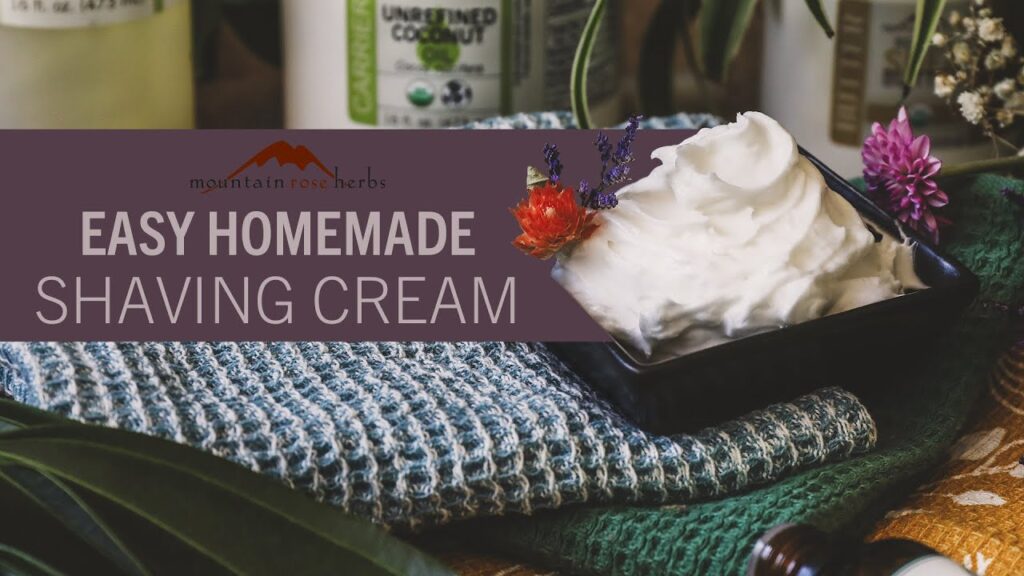
A good shaving cream can make all the difference when you want a close, smooth shave. Whether you’re doing some full-body grooming or just cleaning up your beard, the rich texture of this cream feels wonderful as it creates the perfect barrier to safely and softly shave away unwanted hair.
We chose kukui nut oil for its wealth of linoleic and alpha-linolenic fatty acids to nourish your skin and we’ve added rosemary and bergamot mint essential oils for a fresh and clean scent. This shaving cream is also completely customizable—substitute oils and butters of your choice or create a different essential oil blend to make it your own!
Homemade Shaving Cream

A good shaving cream can make all the difference in both the quality and comfort of a shave. It’s no wonder then that this homemade shaving cream recipe has been such a longtime favorite of the Mountain Rose Herbs community. Whether you’re working on your beard, your head, or a full-body cleanup, the rich texture of this cream feels wonderful on the skin as it nourishes, hydrates, and makes a perfect surface to safely and comfortably shave away unwanted hair.
We’ve chosen kukui nut oil for its wealth of linoleic and alpha-linolenic fatty acids and added rosemary and bergamot mint essential oils to give our shaving cream a wonderfully clean scent. But one of the beauties of this recipe is that it is supremely customizable. Feel free to substitute oils and butters (sunflower oil would be a good swap for the kukui nut oil) and create your own essential oil blend to suit your mood.
Homemade Deodorant: How to Make Natural, Herbal, Roll-On Deodorant

Summer being what it is—with all the extra sunshine and outdoor fun—our deodorant choices start to matter in a bigger way. Consumers have become increasingly aware of the potential issues that can come with using deodorants with ingredients like propylene glycol, aluminum, and triclosan, and have been turning more and more to natural deodorants. Unfortunately, while over-the-counter natural deodorants are a safer and more earth-friendly option than those loaded with parabens and chemicals, they are still packaged in mostly non-recyclable plastics that millions of Americans throw away every year. Happily, it’s an easy task to make your own natural, herbal, roll-on deodorant.
Just so we’re on the same page, it’s important to know that deodorants aren’t meant to reduce or eliminate sweat. No matter what those old antiperspirant ads used to tell you, sweating is essential for the human body. Its primary task, of course, is to help control body temperature, but sweating also helps moisturize the skin and increase skin hydration. The kind of sweat we produce when exercising or relaxing in a sauna is also evidence that we’re supporting heart health and mental wellbeing. Our bodies need to sweat, so it behooves us to find natural, safe ways to neutralize any resulting underarm odors from this necessary bodily process. That’s where our herbal allies come in!
This simple recipe for a liquid roll-on deodorant is a longtime, tried-and-true Mountain Rose Herbs favorite. It’s effective, wonderfully low-mess, and easily portable so we can take it with us and reapply as needed. Also, it is easy to customize to meet your unique needs and aroma preferences. Need more absorbency? Add a bit of baking soda or organic arrowroot powder. Want to customize the scent? Create your own blend of essential oils!
