
Natural Homemade Slime with Psyllium

Summer is a great time to make simple kid-friendly psyllium slime! Unlike so many of the DIY slime recipes you find on the Internet, slime made with psyllium husk is pure, natural, and safe. It takes less than 10 minutes to make and is good for days of fun. Many of us have psyllium husk around the house, so it’s easy to whip up a batch of this crazy substance that defies Newton’s laws of viscosity, but if you’re not one of those people, you may be asking yourself what in the world you’re going to do with the extra psyllium husk when it takes as little as a teaspoon to make slime. Research shows that psyllium husk offers our bodies myriad benefits, promoting digestive and heart health as well as healthy insulin and blood sugar levels. It’s also handy in the kitchen and is a key ingredient in gluten-free baking. Ultimately, what makes psyllium husk good for our gut and gluten-free lifestyle is also what makes it an excellent ingredient in natural DIY slime: this high-fiber husk expands with liquids and forms a gel. It just so happens that that gel is a lot of fun to play with!
How to Make Slime with Psyllium Husk

Slime—that strange substance that defies Newton’s laws of viscosity—has been a staple in store toy aisles for almost 50 years and the DIY versions have been around almost as long. The typical school-science-project slime recipe involves mixing either borax or contact lens solution with PVA glue and water. The science behind it is a chemical reaction between the polyvinyl acetate in the glue and the borate ions in the contact solution or borax, an action called cross-linking that results in a logic-defying substance that is a whole lot of fun to play with. However, fascinating DIY science aside, too much exposure to boron—which is the base of borax, boric acid, and also, ironically, that contact lens solution—can cause respiratory, skin, and eye irritation, and when ingested can lead to nausea, vomiting, and diarrhea. Note the caution on the front of a box of borax detergent: Caution: Eye irritant, may be harmful if swallowed. Needless to say, that DIY slime hack is not ideal for small children, particularly those who tend to taste-test things. Fortunately for the child in all of us, you can make slime from psyllium husk!
Catnip: Beneficial Herb for Humans and Cats + DIY Cat Toy Ideas

Nepeta cataria, commonly called catnip, is an ancient member of the mint family. It has been used in western folk practices for millennia, and is loved for its gentle, calming properties. Herbalists and parents often brew this child-friendly herb into a soothing tisane, but it can also be taken internally as a tincture. For topical use, catnip can be infused in oils, or used as an essential oil or hydrosol to bring an herbaceous, relaxing scent to body care products. Perhaps, however, catnip is best known as the herb most loved by our feline friends.
Arnica Hand Balm Recipe for Hard-Working Hands
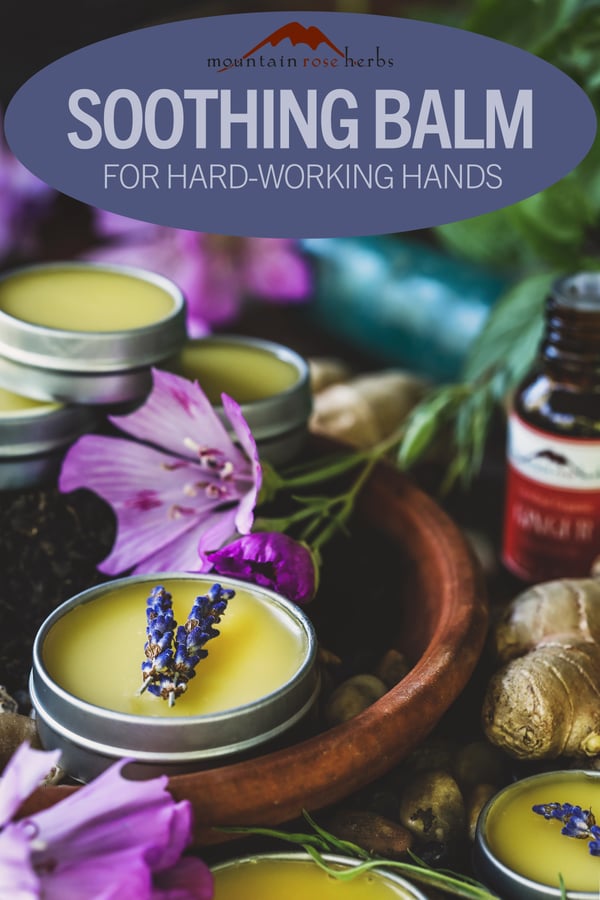
This time of year, I’m reminded of my love for herbal salves, and in particular, this Gardener’s Salve. The blend has been in the Mountain Rose recipe book for many years and is one that I turn to each spring and summer. Between planting, weeding, and pruning, my hard-working hands reach for this DIY hand balm time and time again. Being with the plants does wonders for my emotional wellbeing so taking the proper steps to ensure I can do it in optimal comfort and for many years to come is very important to me.
DIY Roll-On Lip Gloss for Summer

When I’m about to embark on a summer adventure, I always do the final check before walking out the door—keys, wallet, water, and lip balm. Being ill-equipped with any of these staples puts a real damper on my ability to take impromptu diversions on the roads less traveled.
I appreciate the ability to move with fluidity while on my outdoor excursions, but I don’t enjoy it when my lip balm embodies that sentiment, too—I needed a solution to prevent my beloved lip-assistant from melting in my car, backpack, or pocket. And further, I needed my non-melting lip balm to still work effectively! Then I had a light bulb moment; a roll top bottle would work wonderfully for this purpose!
Spicy Paloma Cocktail & Mocktail with Herbs

Cocktails and mocktails provide the perfect opportunity to put our favorite botanicals to creative use. Whether mixed with fresh garden herbs, homemade tinctures, or kitchen spices, mixed drinks are a fun and tasty way to enjoy the benefits of herbs and spices—and to apply our love of herbalism.
Earth Goddess Perfume Blend with Essential Oils

As a newly engaged person, I am starting to look at things a bit differently. For instance, creating recipes is a major part of my life, and I find myself experiencing that process through a slightly different lens. Now as well as recipes that I craft for my own use, I am starting to consider party favors and elements to include in my wedding. I’ve been thinking that a variety of homemade perfumes made with organic ingredients would be a fun zero-waste party favor and they are incredibly easy to scale up and to make in bulk. So, I went to the drawing board with some themes and ideas.
Herbal Hair Care & Natural Hair Color

When I say “herbal hair,” what is the first thing that comes to mind? Confusion? An image of someone who rarely takes care of their locks? Or maybe even a slight understanding of the magick of apple cider vinegar as a rinse? To me, herbal hair is the alchemy between humans and the earth. The delicate dance between caretaker, gardener, and healer. Beauty rituals that comfort our souls and release our grip and dependence on man-made products. At the root of it all, herbal hair care can nourish our scalps and color our locks, simply by using flowers, leaves, roots, and seeds. This can be in the form of a hydrosol mist, a leave-in spray, or an infusion of jojoba oil and rosemary for scalp nutrients.
Spring Rain Essential Oil Blend + Wax Melt Recipe

I love to live fully within the seasons. I take in all the nuances of the seasonal elements, ebbing and flowing with the twists and turns of the weather and the expansion and contraction of daylight. This mindfulness practice allows me to connect with the “now” and fully appreciate all that the Earth shares with us through her wondrous cycles.
Now, as the spring rains fall and the first blooms of the season begin to unfurl, I feel called to create a new aromatherapy blend that melds with my natural environment. I have found over the years that many seasonal aromatherapy creations are created to match the exact scents of the season, rather than to complement nature’s aromatic offerings. In other words, they try to “outdo” the subtle aromas of nature by making them stronger.
I crafted this “Spring Rain” recipe to highlight the elements of spring while leaving enough room for nature to shine through. The bergamot I used in this blend is light and breezy and allows the fresh blooming flowers to dance with the olfactory senses. Similar to cheery lemon balm, litsea cubeba is added as a symbol of the sun which generously shines longer and with promise. Meanwhile, sweet marjoram offers an herbaceous tenacity, which helps balance the ethereal scents of the previous two oils. And finally, vetiver grounds out the blend, offering its sweet and earthy notes, symbolizing the damp earth.
DIY Shower Steamer Recipes (Calming & Uplifting Variations)

Treat yourself or someone you love to a spa-scented shower experience with easy-to-create “Shower Steamer” tablets. Shower steamers use all-natural salts (typically baking soda) and essential oils. These little aromatherapy pucks can turn your shower into a spa-like experience. It is a simple product made up of just a few household ingredients and your favorite essential oils. The tablets dissolve slowly as you shower to create a lasting aromatherapy experience and the warm steam helps diffuse the scent. You can select scents that will energize, relax, or help with seasonal congestion.
